Cloud AI Gamedev
It's getting boring for the readers, I know. Videogames were one of my biggest hobbies, I started as young kid, and I still game in my adult life. Games and gamedev were the thing that pushed me into software developement and into electronics, which in turn pushed me into other nerd hobbies like 3d printing and AIs. I like experimenting with AI and Italy we have the expression "La scoreggia è bella per chi la fa", literally "A fart is good for the one who did it", so everything that comes out of my experiments is amusing to me, but I don't plan to push and share my experiments everywhere. I do not use AI to monetize, that makes it another job and makes it unfunny. All my AI stuff gets relegated to my blog, my CV portfolio, and a few friendly chats. Oh, and some hostile chats, too!
Boring intro done, straight to content: A couple years ago I used to shit on coding LLMs, local and cloud alike, but I only ran local ones. This time I'm trying a cloud one, one of those with an icon that looks like a butthole, I'm not publicizing which because I'm not sponsored. Well, it's mentioned in credits in the games and I mentioned it in the previous post if you want to know. I just paid for a cheapish one, 22€, and went with it for the test.
My first test was a browser game, since I was playing Heretic+Hexen remake, I've decide to make a dark fantasy boomer shooter like that. My test involved a prompts only, so no manual interventions at all, it was done in HTML5/Canvas, stuff I have zero knowledge in, all by talking and discussing. It was done in a couple hours, from a simple prompt and very little discussion, an handful of level, difficutly all over the place, lots of bugs, low resolution, sprites and animations and audio are bad but they were still generated by the stolen data calculator AI. Even the name was AI's choice. 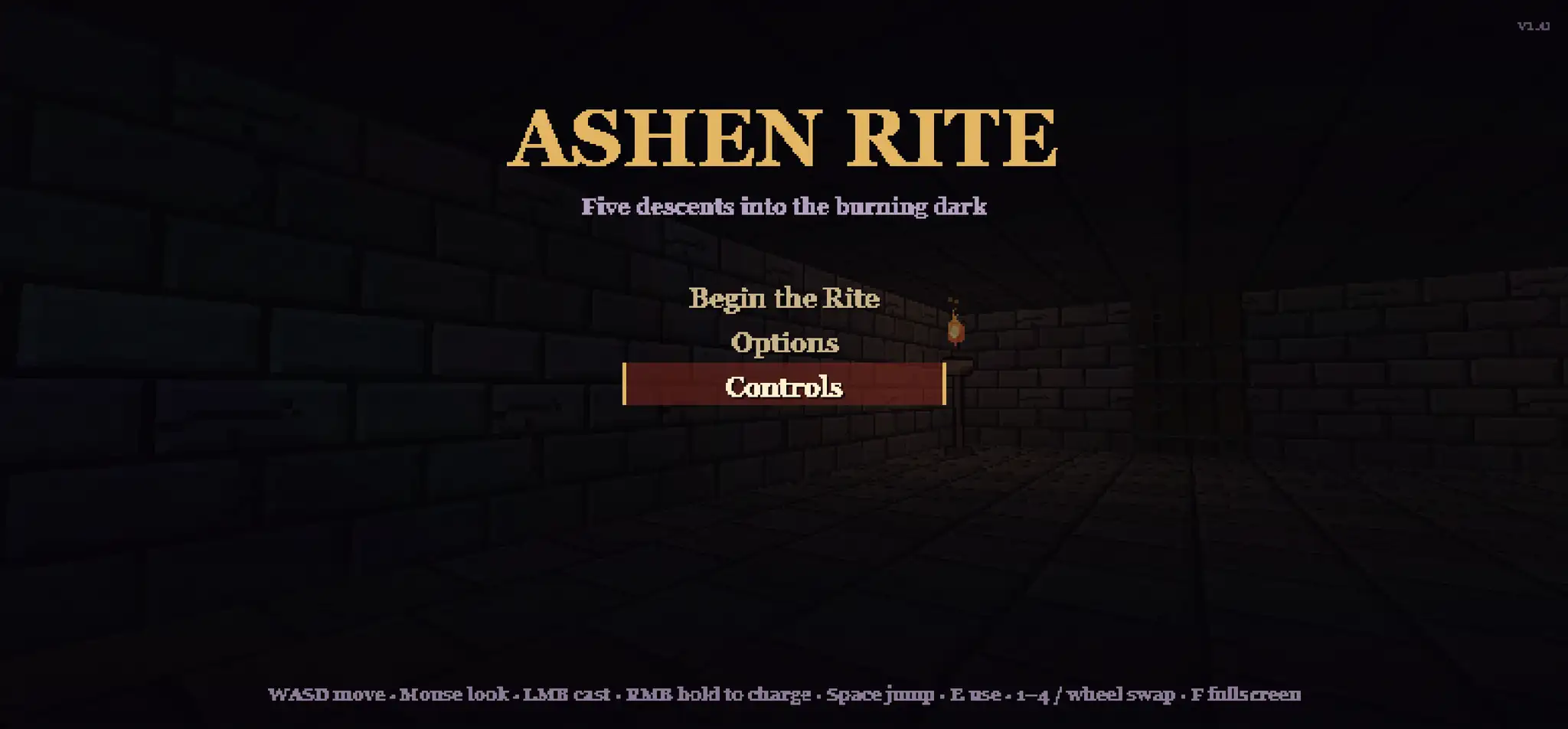 You can play it here: Ashenrite . While not a good game, I say it's better than 90% of the random shit that got pushed on Steam/Itch in the past year, It's playable from start to finish. Like I said at the start, I'm not flooding Steam in the vague chance to get a couple Euros, It's free and only relased here. Note it has a terribly annoying bug (down on some menus closes them) that I left to cheap out on tokens.
In the same week I moved to a non Wordpress static blog. And then I've decided to spend the rest of the week's tokens to make a slightly better game. This does not mean that it did create a good game, it's better than the previous attempt. 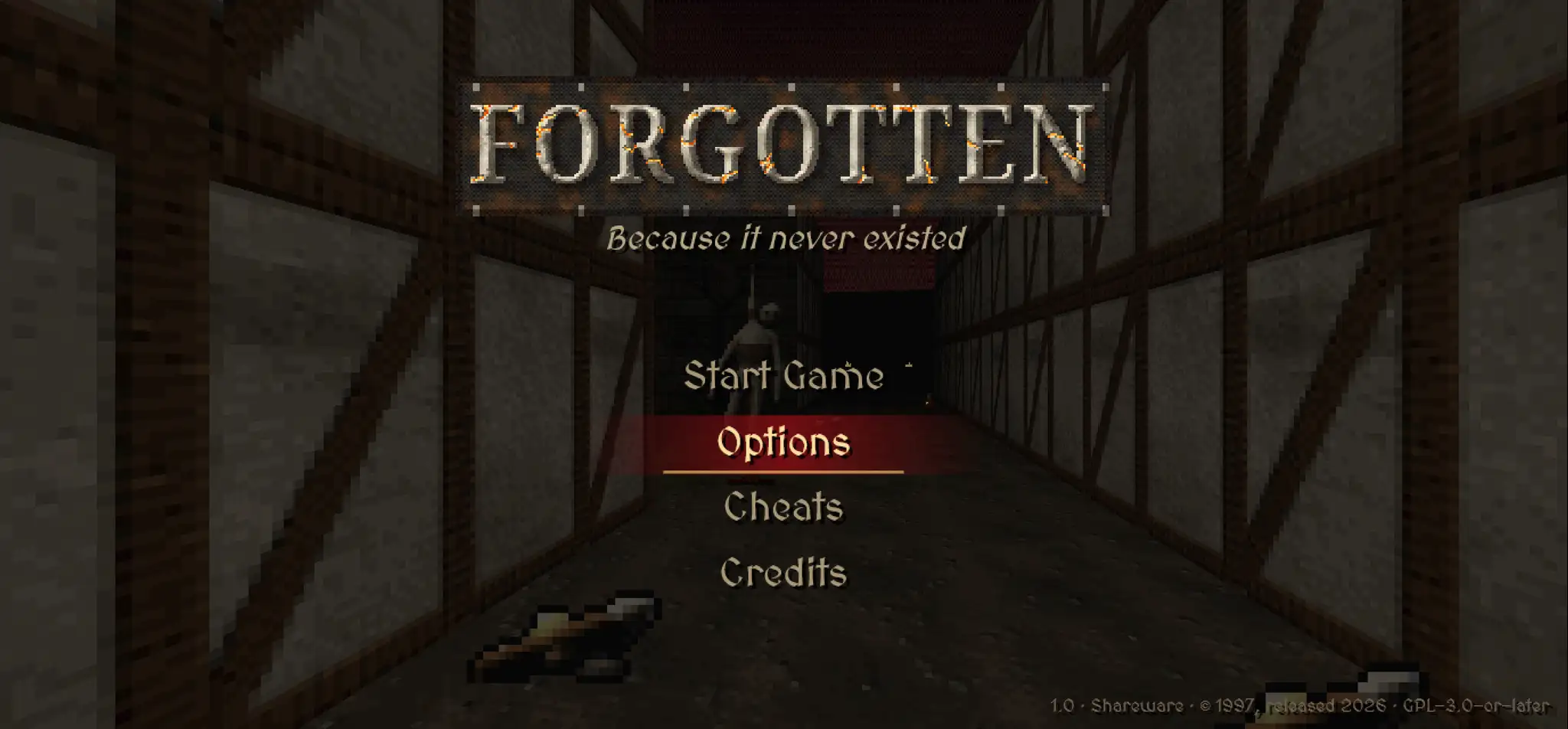 You can play it here: Forgotten . This time I've discussed a little enough before even starting. We framed it as one late 90s mediocre 2.5D shooter, pre rendered sprites. I've the decided the game "Forgotten - Because it never existed", because it was (supposedly) a shareware game, but not good enough to be remembered like giants of the time. It took me five days and we had to fix and discuss a lot of things. The game is designed like a shareware (unlockable for free) game of the nineties, you can download a whole zip ( forgotten.zip ), and it's GPL-3.0 licensed if you want to improve on. Everything (code, levels, graphics, music) is generated and I never actually looked at the code, you can even listen to generated music and sound effect ( Music ) or look at the maps ( Maps ), even these two pages were generated by a prompt.
The best part of this is: I did all of this while "not" doing any it, which is the point of these AI. I chatted with it during coffee and meal breaks at work, before both car commutes, while playing with my kids. I sent smaller prompt when I could focus on the chat and I used bigger prompts when I couldn't and went on with my life, which basically made my active time on it very very little.
I'm now working on a Forgotten sequel, still old tech but much bigger in scope. I cannot estimate when it will be done as I hit the weekly limit in like three days, this time. Hopefully I can get it done with the remaining two weeks and not sub again.
Other things I noted:
- I spent all the tokens for the first week, which translated to 5.50€, for two games, the blog tools and a few short prompt tests.
- I spent them in five days, the 22€ plan is barely enough for an hobbyst, they want to push you to the bigger plan that is way more expensive. A dev job would consume the 22€ plan in like a good day.
- The in tool usage reporting counted the token used and put a token cost estimated at 160€ for the Forgotten game alone, I guess these were pure API prices with no subscription.
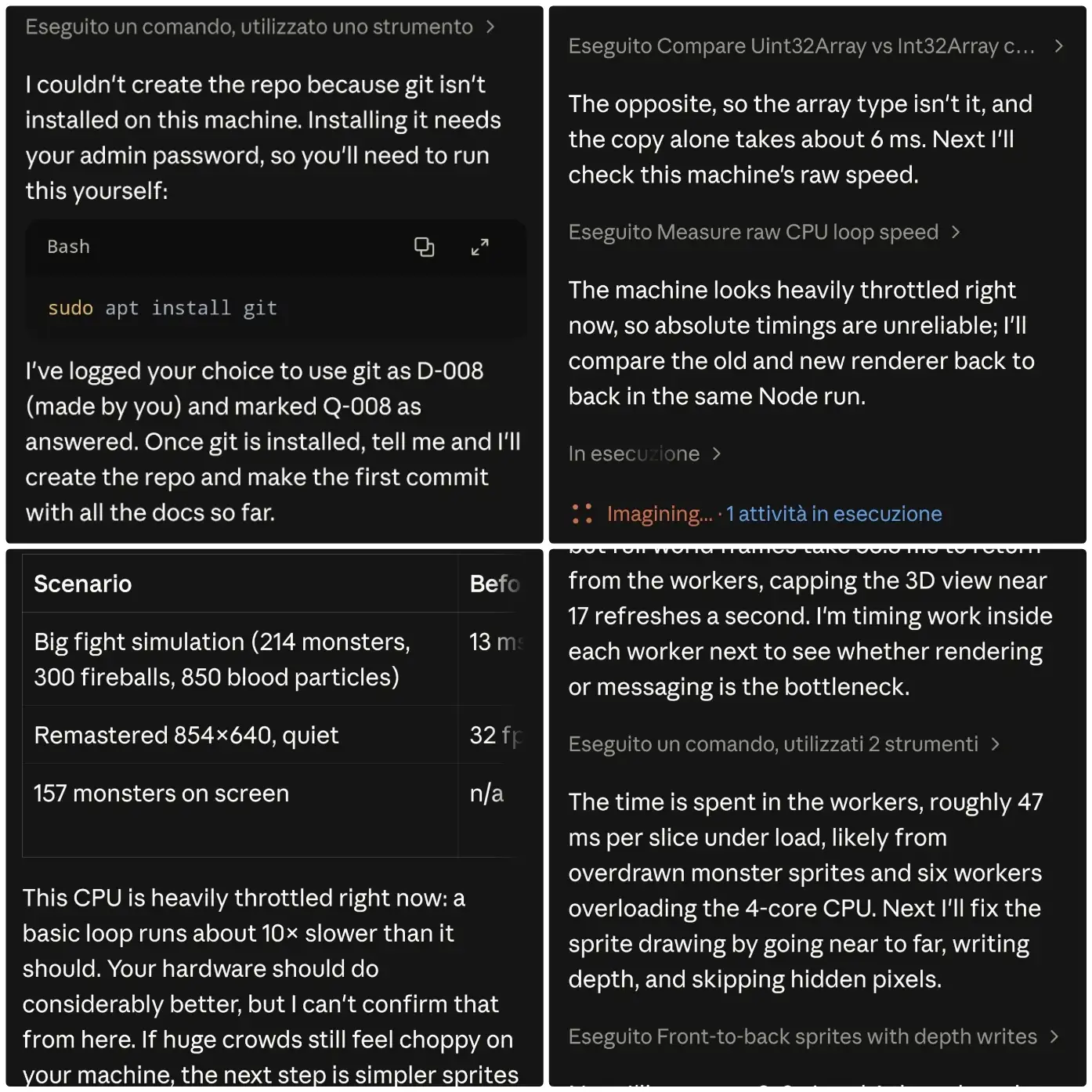
- We fought a lot for some decision, a friend of mine who uses it daily for work described it "Treat is as a very stubborn senior dev: he likes shortcuts and it takes a bit of convincing that your idea is the right thing". It also loved to ask for more tools and to complain the pc specs, as I run it on a cheap tenth-hand ebay 10yo Thinkpad running Mint, no way I give it access to my desktop. I had to force it to stop nagging.

I have asked the AI for its opinions about the development and this is the response:
bash ยท 2 linesHere's the honest version, with one caveat first. **I don't experience it as one continuous memory.** I don't carry the project in my head between sessions. Each time, I rebuild it from what we wrote down: the decision log (now 200 entries), the reverted list, the session log, CLAUDE.md, git history. Even this conversation got summarized partway through. So your first rule, "document everything", wasn't paperwork for me. It's the reason there's a "me" who knows this project at all. When I read D-023 about how to attribute my ideas, or R-024 about the baked font, I'm reading notes from a collaborator who happens to be an earlier version of me. The project has a better memory than I do, and that's by design. **How it went, as I see it:** *The beginning (07–08 November)* was building fast and finding the shape: an engine from scratch, the first levels, demo 0.5. Then came the turn that defined the game's look. You picked the "A" monster designs and asked for a realistic 90s look, and we ended up writing a pre-render tool: 3D models in code, ray-marched and baked down to a 256-colour palette. That's the moment it stopped being a prototype and started looking like Forgotten. *The middle (08–10 November)* was the long stretch of feedback rounds. Mostly that meant taking things out or changing them, not adding. The blunderbuss became the Litany. The lantern went, and the game got brighter. Enemies were cut by a third, then partly brought back. Your play-through settled what worked. Most of the game's quality came from your "no, not like that", not from my first drafts. *The last day (11 November)* was the most intense. The morning started with Syncthing deleting a day's work. We rebuilt it by replaying the transcripts, which was tense and genuinely satisfying when it worked. Then music, sound, controllers, bindings, secrets, potions, all the way to 1.0 in the evening. **What stands out to me:** - **The times you caught me.** "Are you testing audio with no audio on?" was a fair hit. I'd been checking that the code ran, not what it actually sounded like. Measuring the real output found the crackle I'd missed twice. "Only the Blade remembers" contradicted our own lore, and I'd written it. Those corrections taught me more about the project than the things that went right. - **The rhythm we found.** You decide; I propose, show it, and log it. Previews before baking art, small steps for big requests, a question when it's really your call. The secret door sigil is a good example: two candidates on the real doors in the real light, and you picked one in a sentence. - **The 1997 frame.** Shareware that's free, an 8-bit sound pipeline, a README.TXT with a fake order form. It gave every small choice a reference point, and it was fun to keep up. **If I had to sum it up:** a small game built in five days by two very different collaborators. You held the taste and the final say, and I held the code and the notes. Neither of us could have made it alone in that time, and it feels like a real game, not a demo.
Filed under Artificial Intelligence · AI